Followers

Wednesday, July 14, 2010

Of Baby's Full Moon, Pui Yits And Ang koos

When a baby turns one month old, most Chinese parents celebrate the event with a party. The celebration is called ''Baby' s Full Moon" and it also marks the last day of confinement for the baby's mother. The confinement period is a traditional post-natal Asian practice and is so called because the post-partum mom is confined to the home for a period of one month after the delivery of her baby. Various routines and rules are observed. A special diet is cooked for the mom to help accelerate her recovery from her weakened state and replenish the loss of blood and nutrients after childbirth. The Chinese believe that everything in life requires a balance between the Yin and the Yang in order for harmony to exist. Yin is cold and Yang is hot and the Yang in a post-natal mom diminishes after child birth. To restore the lost Yang and expel the trapped 'wind' in her body (when the placenta is exerted out) , she is given "hot" foods that are loaded with ginger, sesame oil, black vinegar, rice wine, etc.
The confinement period is an entire month of total pampering for the post-natal mom. While she rests all day and eats 5 meals per day, a 'Pui Yit' does all the chores, cooks and looks after the newborn. Traditionally, the role of the Pui Yit is played by the mother-in-law so it's kinda like pay-back-time for the post-natal mom! These days, moms-in-law would gladly relinquish this role. I know I would.
A 'pui yit' (literally translated as confinement companion in Cantonese) is employed to care for the mother and newborn during her period of confinement. Pui Yits are generally elderly ladies above their 50s. These ladies usually have a brood of children and grandchildren and so with their vast experience and wisdom that supposedly commensurate with age , they qualify for the position.
For that one month of sleepless nights (yes, they change the nappies and bottle feed the babies), they are paid a hefty sum (a four figure salary) and a generous ang-pow for their effort!
The downside of the confinement period? There is a long list of taboos and DOs and DONTs to adhere to. The pui yit watches the post-natal mom like a hawk so it's not easy to get away with the rules.

Here are just a few.

1. Bathing in really, really hot water that has been infused with lemon grass, old ginger, tumeric leaves and brandy to prevent rheumatism and joint pains in later years.

2. No washing of hair for an entire month! My head started to itch after the second day and 2 weeks was my breaking point. I washed my hair on the sly when the pui yit dozed off and started to snore. Of course she found out and scared me with tales of moms who disobeyed and ended up sorry.

3. No eating of yams or your 'wound' would itch for a hundred days!!

4. No stepping out of the house (hence the word 'confinement') - something to do with encountering evil baby-snatching spirits. Seriously, who wants to be seen in public when your hair stinks to high-heaven! I had this mental image of flies buzzing around my head where mushrooms had sprouted.

4. Drinking water while standing causes incontinence. Hmmmm, is that why I leak whenever I yell at my boys?

5. Eating 'hot' foods. Sceptics, explain this! Hubby who could never resist a warm bowl of 'Jee Geok Choe' (pig trotters in black vinegar) had one too many and ended up with high fever. Too much Yang!!

For more confinement taboos read here...

On the last day of the confinement period, gift packs consisting of red eggs, angkoos, yellow rice, curry and pickled ginger are distributed to relatives and friends as proclamation that a new member has been added to the family and that the confined mom is now ready to receive visitors. A party is usually held and visitors arrive bearing gifts and ang-pows for the baby.
Every item in this basket has a symbolic meaning
Hard-boiled eggs with their shells dyed red symbolize prosperity and fertility
Angkoos (meaning red tortoise in Hokkien) represent the baby's gender. Plain for males and textured for females.
Rice to ensure that there will always be food on the table (not sure about the yellow colour).

Tuesday, July 13, 2010

Jell-O Mold Competition

Here are some of the wobbly gelatinous entries for the Gowanus Studio Space's Jell-O Mold 2010 and 2009 Competitions.
Designers pitted against one another in an effort to make the Jell-O mold cool again. Competitors battled for mold supremacy in the following categories:
•Creativity
•Aesthetics
•Structural/sculptural ingenuity
•Edibility/culinary appeal
•Best use and showcase of Jell-O

2010 GRAND PRIZE WINNER: Aspic Ascension--Tastes Like Heaven by Shelly Sabel

2009 Grand Prize Winner : Jell-O Jewelry by Kandice Levero and Julia Green.

Jell-ROE by Kegan Fisher and Liz Kinnmark

Traditional American Sweets by Andrea Lekberg and Erica Leahy

Devilled eggs

Jiggly Wrap - Hugh Hayden and Savinien Caracostea


Saturday, July 10, 2010

Paul, The Octopus

Paul - my trusted bookie

THANK YOU, PAUL! THANK YOU! THANK YOU! Thanks to Paul, the clairbuoyant octopus, I'm now 10 ringgit (USD3) richer. What? All that excitement over 3 dollars?!! Nah, it's not the money, it's the fun of winning a bet and bonding with Hubby and the boys over a ball game. What's with men and balls? Seriously, I'd rather be doing the dishes but I want the boys to think Mom is cool.
For the uninitiated, Paul is the famous soccer forecaster octopus who's making waves in cyberspace. He's even on Facebook with 93,520 fans at the last count! Of course, there are those who wish to see him end up as sushi on the menu.
After knowing about Paul, I don't think I can ever eat another takoyaki again. Somewhere in one of those er... balls, there could be a psychic octopus who could take Paul's place. After all, the days of our 2 1/2 year-old friend are numbered. An octopus' life span is 3 years which means Paul will not live to see the next World Cup. How sad!

Here are 10 things you didn't know about Paul.

1. He's originally from Weymouth

Although he now resides at the Aquarium Sea Life Centre in Oberhausen, Germany, Paul was actually born in Weymouth and moved from the town's Sea Life Park in 2006.
Fiona Smith, from Weymouth Sea Life Park, told the Dorset Echo: “He never made any predictions while he was living here but maybe he was waiting for a big event like the World Cup until he revealed his abilities.”

2. He's a wanted man

Argentine chef Nicolas Bedorrou was so angry after Paul correctly predicted his team would lose its quarter-final clash with Germany that he suggested a way to cook the octopus.

He posted on Facebook: "We will chase him and put him on some paper. We will then beat him (but correctly!) in order to keep the meat tender and then put it in boiling water."

3. He's big news

Paul's predictions have gained so much popularity that German news channel NTV has started to broadcast his predictions live, with two reporters situated next to his tank so they can bring their viewers all the latest goings on.

4. He's the biggest celebrity in Oberhausen

Having wowed the world's media with his predictions, Paul has put the mundane Germany city of Oberhausen on the map. Oberhausen, which is twinned with Middlesbrough, also boasts such sights as Germany's biggest shopping centre and Europe's largest disc-type gasometer. Worth a visit then ...

5. He's got a good track record

Paul began to predict Germany's results during the Euro 2008 tournament, correctly choosing the winner in four of Germany's six matches. He predicted Germany to win every match but was wrong when they lost to Croatia and in the final to Spain. So far at the World Cup 2010, Paul has correctly predicted the winner of each of Germany's five matches.

6. He could have made you a packet

Having correctly tipped the winner of Germany's five World Cup matches, backing Paul's tips could have netted you a few squid (sorry).

A £1 accumulator bet on all five results would have won you £131, which could comfortably buy you a few bags of mussels.

7. He's an intelligent creature

Octopuses are highly intelligent animals and have been proven to have a strong short and long-term memory.

Fiona Smith, head of animal care at Weymouth Sea Life Park said: “Common octopuses like Paul are very intelligent. We equate their intelligence with that of a dog and they love problem solving and figuring things out."

8. He's a Twitter and Facebook sensation

Paul has become an online phenomenon over recent weeks and is now one of the most talked about topics on the web. The phrases "Paul the Octopus" and "Pulpo", the Spanish word for octopus, are both currently in the top 10 global trends on Twitter.

9. He doesn't cheat

Paul predicts results by opening one of the two flag-covered plastic food containers in his tank. Tanja Munzig from the Sea Life Centre in Oberhausen has denied any suggestions that the containers are rigged.

She said: "There are no tricks, the food is the same and everything in the two containers is the same except for the flags."

10. He's not scared of death threats

According to his keeper, Oliver Walenciak, Paul is unfazed by a series of death threats sent by Argentinian supporters who blame the octopus for their World Cup exit.

He said: "There are always people who want to eat our octopus but he is not shy and we are here to protect him as well. He will survive."

Wednesday, July 7, 2010

The Fabric Sculptures of Lisa Lichtenfels

Very often mistaken for photos of living beings, these realistic sculptures are the creations of Lisa Lichtenfels. The figures have skeletons made of wire, muscles of wadding and skins made of sheer nylon stockings.

Tuesday, July 6, 2010

Durians

Q. What fruit looks like a sea-urchin and smells like the city dump on a hot summer's day?

A. Durian

Here are other descriptions of the unforgettable odour of a durian - stinky socks, butane gas, rotting fish, Camembert cheese, skunk spray etc. The husband of a Malaysian pally visiting from America described the taste of durians as 'eating custard in the toilet' .Chef Andrew Zimmern compares the taste to "completely rotten, mushy onions while the 19th-century British naturalist Alfred Russel Wallace famously described its flesh as "a rich custard highly flavoured with almonds."
Hailed as the "King of Fruits" in Southeast Asia, the durian is formidable-looking with its spiky husk.The world durian means 'thorny' in Malay and Indonesian. Once, I witnessed a street fight when rival gangs were hurling the lethal fruits at one another.
The pale yellow flesh emits a very pungent odour that lingers for days. While durian aficionados find the aroma heavenly, others regard the smell as overpowering, malodorous and disgusting.
In Southeast Asia, it is not uncommon to see signs like this prohibiting the fruit in hotels, hospitals and public transportation.
The fruits are not plucked from the trees. Ripened fruits that fall to the ground are collected. It is believed that a durian has eyes and can see where it is falling because the fruit allegedly never falls during daylight hours when people may be hurt. Rarely have I heard of someone hit by a falling durian!

When our Danish neighbours first moved into our condo, they reported the smell of leaking gas to the management office. Upon investigation, it turned out that the odour came from one of the units where a durian party was held!!

Durians, anyone?!!

Monday, July 5, 2010

Breakfasts Around The World

Bear with me pallies if you're tired of another one of my 'around the world' posts. I just can't shake off this fascination of what people eat around the globe.

Check out these breakfast staples.

VIETNAM
Pho (pronounced "fuh") is soup with rice or wheat based noodles that's flavored with a meat such as chicken, pork or beef.

MEXICO
Huevos motuleños - The dish is made with eggs on tortillas with black beans and cheese, often with other ingredients such as ham, peas, plantains, and salsa picante

INDONESIA
Nasi Goreng - translates as "Fried Rice" in Malay and Indonesian .The main ingredients for nasi goreng include pre-cooked rice, soy sauce, garlic, shallot and some spring onions for garnishing.

MOROCCO
Tagine - A slow-cooked stew which is named after the special pot in which it is cooked. Braised at low temperature, the stew consists of meat (usually lamb) and a variety of herbs and seasonings

BELGIUM
Surprisingly, Belgians do not eat their most famous food, Belgian waffles for breakfast! Breakfast in Belgium consists of breads, toasted or untoasted, with several marmalades, jams, and nut spreads etc.

SINGAPORE
Kaya Toast - Singapore's national breakfast. Essentially, Kaya Toast is just kaya and butter spread on two pieces of toasted bread. Kaya is made of eggs, sugar and coconut milk and flavored with pandan. The Pandan Leaf comes from the Screwpine Tree, which can be found in tropical areas of Asia and Europe. The plant has many uses.

UK
An English breakfast - the quintessential breakfast the world over.
Key components include: bacon, sausages, black pudding, eggs, tomatoes, baked beans, mushrooms potatoes, bread etc.

MYANMAR (formerly known as Burma)
Mohinga - rice vermicelli in fish soup and considered by many to be the national dish of Myanmar.

CHINA
Congee and youtiau (Chinese crullers) - Many Chinese begin their day with a warm bowl of congee, a watery rice gruel that bears a marked resemblance to porridge. Youtiau is dipped into the warm congee.

TURKEY
Menemen - a dish made of eggs, tomatoes, onions and green peppers

Sunday, July 4, 2010

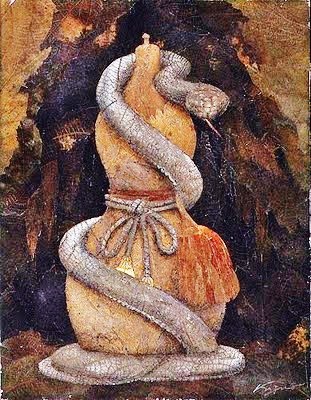
Kazuo Akasaki - Fallen Leaves Art

Japanese Artist Kazuo Akasaki composed these pictures out of fallen leaves in their natural colours. While I find them beautiful, I think they are kinda depressing and too sombre.
source - http://www.japanprobe.com

Friday, June 11, 2010

Piggies In Boots

Meet Cinderella, a six-week old piggy who developed a phobia for mud! Afraid to get her trotters dirty, the porker refused to join her siblings while they cavorted in the mire. Owners Debbie and Andrew Keeble were initially baffled by their piglet's behaviour. Remembering the four miniature wellies used as pen and pencil holders in their office, the Keebles slipped them on the piglet's feet - and into the mud she happily ploughed.
found @ http://www.dailymail.co.uk
Then there is Clive, the teacup piglet who might have been happier without the wellies. He was dressed up by his breeders at Pennywell Farm, Devon.

Read more .....