Followers

Friday, January 17, 2025

Day 7: Croatia - Dubrovnik (Day1)

Dubrovnik, the "Pearl of the Adriatic," is straight out of a fairy tale! With its majestic medieval walls, breathtaking vistas, and enchanting old town, it's no surprise this Croatian gem was the perfect setting for Game of Thrones' King's Landing.
 
In 1667, Dubrovnik was devastated by a major earthquake, which destroyed much of the city and led to significant rebuilding. The city's Baroque architecture and layout that visitors admire today largely stem from this period of reconstruction.
Rector's Palace
Ragusa was the historical name for Dubrovnik, a thriving maritime republic during the Middle Ages. The Rector was the elected official who governed the city-state for a month at a time, ensuring fair and efficient administration. The Rector's Palace served as his official residence and the seat of government.

City Wall and Minčeta Tower - our first view of the massive city walls.
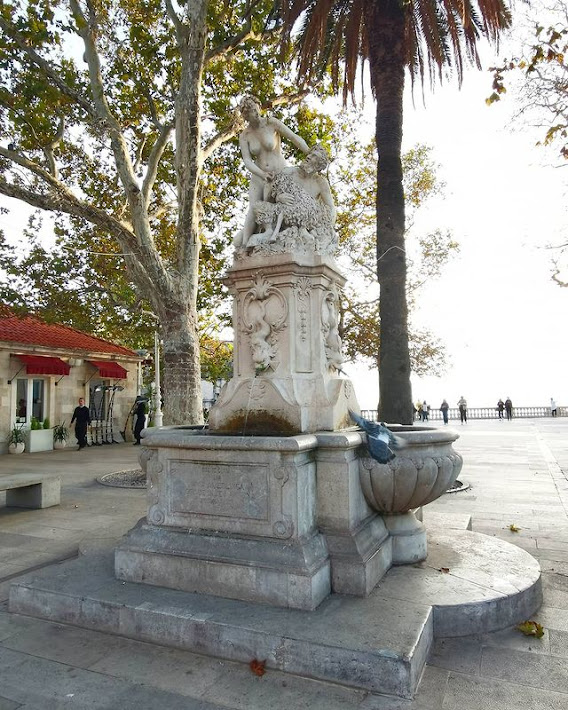
 Statue of Aphrodite and Pan on Brsalje Terrace
Pile Gate
The Pile Gate is one of Dubrovnik's most iconic landmarks and serves as the main entrance to the city's stunning Old Town. Constructed in the 15th century, this magnificent gate is a blend of Gothic and Renaissance architecture, featuring an imposing stone archway and a wooden drawbridge that once defended the city from invaders.
 One particularly fascinating detail about Pile Gate is the small statue of St. Blaise, Dubrovnik's patron saint, perched above the entrance. St. Blaise is a constant presence in the city's architecture, symbolizing protection and unity for its residents.
Baroque church of St. Blaise
The church houses sacred relics of the city's patron saint, including his arm, skull, and leg, preserved in ornate gold and silver reliquaries. These relics miraculously survived a devastating fire in 1706 that destroyed much of the church's interior, a fact seen as a divine sign of St. Blaise’s protection over the city. The church was rebuilt in its current Baroque style by Venetian architect Marino Gropelli between 1706 and 1714, and the relics remain a centerpiece of Dubrovnik’s cultural and religious heritage, prominently featured during the annual Feast of St. Blaise on February 3rd.

Cathedral of the Assumption of the Virgin Mary
St. Savior Church
Onofrios's Large Fountain


There is a popular local legend associated with the Onofrio Fountain. According to the tradition, if you drink from all 16 taps of the fountain in a clockwise direction, your wish will come true.
Stradun
The Stradun, Dubrovnik's main street, is a stunning marble-paved promenade that runs through the heart of the Old Town. Its smooth, polished surface is one of the most distinctive features of this historic city. Over the centuries, millions of footsteps have gradually worn down the marble, giving it a shiny, smooth texture that adds to the street's charm and character. The constant flow of tourists and locals alike has contributed to the unique shine that now reflects the city's long-standing history and its vibrant present.
Statue of Marin Držić
Marin Držić is a renowned Renaissance playwright often called "Dubrovnik’s Shakespeare." The statue has become a popular spot for tourists seeking good luck. Located near the Marin Držić Theatre in Old Town, visitors believe that rubbing the statue's nose will bring fortune and ensure a return trip to Dubrovnik. Over time, this has given the bronze statue’s nose a shiny, polished appearance.
Can you spot the cross in this photo?
 The cross is actually the large cross atop Mount Srđ, a prominent landmark in Dubrovnik. It was destroyed during the Croatian War of Independence in the early 1990s but was later rebuilt as a symbol of hope and resilience. Today, it stands tall, reminding visitors of the city's strength and history.
Son#2 was fascinated by this striking relief found on the base of the statue of poet Ivan Gundulić.
Could this relief very well be the secret inspiration for Game of Thrones? Picture this: a regal queen sits poised on her throne, guarded by a fierce dragon and a mighty winged lion, as chaos unfolds around her. Could this be the prototype for Daenerys Targaryen, with her fiery dragons, or Cersei Lannister, ruling from the Iron Throne?
Dubrovnik's Historic Old Port (Stara Luka)

LUNCH - Tata's Cocktails & Burgers

During our Balkan tour, all meals were included and arranged by the tour operator, except for today when we had the freedom to explore and enjoy lunch on our own. We practically had seafood almost every day on this trip, so we decided to switch it up and went for burgers instead!

One great perk of traveling during the shoulder season with a guided group tour is the opportunity to stay in 4 to 5-star hotels at a lower cost, thanks to block bookings, along with cheaper flights. And yes, shoulder season means the colder months. Coming from my corner of the world where it’s forever summer, the cold climate is an adventure itself. It’s a thrilling shift—stepping into a world of vibrant fall foliage, wearing clothes you otherwise never get to wear—something other than the usual tees, shorts, and flip-flops I live in back home—and savoring the comforting scent of hot drinks.

Of course, there are some downsides. A fixed itinerary means a packed schedule—wake-up call at 6:00, breakfast at 7:00, and off to the next destination every day. Dinner is usually buffet-style at the hotel, and unless you have dietary restrictions, you don’t get to choose. Free time is a luxury, as the tours often wrap up just before dinner. But today was a rare treat—we got back early and finally had time to relax at the hotel after a day of exploration.

Buffet dinner @ hotel
Chilling @ Hotel Valamar Lacroma 

FUN FACT

Historically, Dubrovnik's citizens were required to donate a stone equal to their body weight for the construction of the city's walls. This practice dates back to the 14th and 15th centuries when the city was fortifying itself against potential threats. The city walls of Dubrovnik are famous for their strength and preservation, and the donations of stone were a way for the citizens to contribute to the collective defense. Each resident would give a stone, and it was believed that this contributed to the city's security and prosperity. This practice was part of the broader civic responsibility for the protection of the city.

Stay tuned as Day 2 of Dubrovnik promises even more adventures.
My Corner of the World

Friday, January 10, 2025

Day 6: Croatia and Bosnia & Herzogovenia - Omis and Mostar

Omiš

Ahoy, mateys! Batten down the hatches as we set sail to the historic town of Omiš, once a haven for ruthless pirates on the Dalmatian coast!

Omiš is a charming town surrounded by dramatic cliffs where the emerald waters of the Cetina River meet the Adriatic Sea.
The town was known as a pirate stronghold from the 12th to 14th centuries, with local pirates called Omiški gusari dominating the Adriatic. The nearby Cetina River offered them a secure base, with its winding course and canyon providing natural protection.
Omiš is not only known for its rich history and stunning coastline but also for its striking limestone mountains, which dominate the landscape. These rugged, towering peaks, especially the Omiška Dinara mountain range, create a dramatic backdrop that adds to the town's allure.
FISH MARKET
The fish market is tucked into the charming streets of Omiš Old Town, surrounded by stone walls and traditional Dalmatian architecture.
The market comes alive early in the morning as fishermen bring in their fresh catch from the Adriatic Sea. You’ll find locals bargaining for the freshest fish, squid, and shellfish to prepare their meals for the day.
As I wandered through the Omiš fish market, I couldn’t help but be stunned by a fish I’d never seen before in my tropical corner of the world. Holy mackerel! That fish—I think it might have been a monkfish—was downright scary-looking! Its strange appearance, with its wide, gaping mouth full of sharp teeth and bumpy texture, made it look like something straight out of a deep-sea horror movie! 

Stairs leading to the Mirabella Fortress (Peovica)
Located above the Old Town, the 13th-century fortress served as a stronghold for the famous Omiš pirates. It provided them with a strategic vantage point to monitor and defend against incoming ships in the Adriatic. The fortress offers breathtaking views of the Old Town, with its narrow stone streets, red-roofed buildings, and historic churches nestled below. It’s a postcard-worthy scene.

My knees couldn’t take the climb to the Mirabella Fortress, but I heard from the rest of the tour group that the views from the top were stunning.

Here’s a photo I took from where I was.
According to our local guide, during a Turkish attack on Omiš in the mid-sixteenth century, the town's defenders shouted and fired from the fortress toward the Cetina Canyon. The echoes of their voices and gunfire created the illusion of a far larger defending force, causing the Turks to believe they were outnumbered and ultimately prompting them to retreat from the battle.

                                                                
Lunch @ Restoran Kaštil Slanica, Omiš
Appetizer - fried frog legs and black rissoto
Black risotto (crni rižot) - A classic Dalmatian dish made of cuttlefish and cuttlefish ink. Many people mistake it for squid. Frog legs are more common in continental Croatian cuisine, especially in regions with freshwater lakes. I decided to skip the frog legs since I’m a big fan of frogs and prefer to just admire them from a distance. But the black risotto was absolutely amazing!

A restaurant with a view... and a swashbuckling past! 🏴‍☠️

Spotted this fascinating map on a wall of the restaurant, showing off its pirate history and ties to the old Cetina River fortress.
The restaurant is located in a region, which was once a key area for pirate activity in the Dalmatian hinterland.
The Cetina Steel Bridge
The Cetina Steel Bridge connects two rugged cliffs that rise dramatically on either side of the Cetina River.

As we left Omiš behind and made our way to Mostar, I couldn’t help but reflect on the uniqueness of this quaint pirate town. The rugged cliffs, winding streets, and glorious riverside and coastal views will forever be etched in my memory. It was a perfect blend of natural beauty and rich history, and I absolutely enjoyed our time spent exploring it. Now, as we continue on our journey, I’m excited to see what awaits us in Mostar, but Omiš will always hold a special place in my heart.

BOSNIA AND HERZOGOVENIA

I can hardly believe that I’m actually in Bosnia now. The only connection I had to this country before was the influx of refugees arriving in Malaysia during the 1990s, as the Bosnian War raged on. I also remember that in the late 1990s, my mother visited Medjugorje on a pilgrimage tour—at that time, I had no idea that Medjugorje was even in Bosnia. Now, being here myself, it feels like a surreal and unexpected full-circle moment.

My mother, who is now in the advanced stages of dementia, would have been overjoyed to hear about this visit. I know she would have cherished the opportunity to learn that I’m here, in the very country she once visited with such reverence.

Alas, I am here on a group travel with a fixed itinerary, otherwise, I would have loved to visit Medjugorje myself and experience the place she once held so dear.

MOSTAR

The Stari Most Bridge 
The Stari Most Bridge in Mostar is famous for its magnificent architecture and rich history, but it is also known for an interesting tradition—people who jump off the bridge, often for money! These daring jumpers leap from the bridge into the Neretva River below, a feat that has become a symbol of bravery, especially for locals. It's often done for a fee from onlookers who gather to watch. This practice is not only a thrilling display of courage but also a rite of passage for some young men in Mostar. The jump is about 20 meters (66 feet) high, making it an impressive stunt. In recent years, professional divers have also participated in the tradition, earning a reputation for their skill in executing perfect dives. The jumpers often dive for tips from the crowd, adding a layer of excitement for tourists and locals alike. The bridge itself is a symbol of unity and resilience, having been rebuilt after being destroyed in the Bosnian War in the 1990s. So, the act of diving from the Stari Most has come to represent not just daring courage but also the spirit of renewal in Mostar.

When we were at the bottom of the bridge, there was still dry ground to walk on to reach the perfect spot for the best view of the Stari Most. However, by the time we were returning, the water had risen quickly, rushing in like a tide. I managed to dart back to the bridge just in time, but a couple of people weren’t so lucky and ended up getting their shoes wet—brrr, the water must have been freezing! The stone steps we had come down were already submerged, and to escape the rising water, I had to clamber up the retaining wall nearby, clinging tightly to the railings, to get back to the bridge. What an unexpected adventure, especially for someone like me with anxiety issues!
Graceful minarets rise like slender spires, creating a fairy-tale backdrop for the iconic bridge


The paths in the old market near the bridge are unique and memorable. Unlike the typical cobblestone streets found in many historic European cities, these paths are made up of smooth, rounded pebbles. This not only creates a distinctive, mosaic-like texture underfoot but also makes the paths very slippery, especially when wet. It's quite different from what you might see in other cities and adds to the charm and character of the area.
 Navigating the Stari Most is a unique challenge due to its distinctive design. The bridge's pronounced arch creates a steep incline and decline, which can be tricky to traverse, especially for those unaccustomed to its uneven surface. The bridge is paved with tenelija, a locally quarried stone known for its smooth yet slippery texture, particularly when wet. To aid pedestrians, the bridge features small ridges spaced along its pathway. These ridges act as footholds, preventing slips and offering stability as you ascend or descend.
Despite the spectacular surroundings, I was so focused on not slipping  and carefully navigating the steep incline that I completely missed the opportunity to take in the stunning views of the turquoise Neretva River and the charming old town around me! Crossing the Stari Most truly demands your full attention, and if you plan to walk it, make sure you have footwear with good grip to tackle the slippery surface and uneven ridges confidently. Hats off to those wearing high heels!


Dinner @ Mostar
Somun- traditional Bosnian flatbread
Traditional Bosnian mixed grill platter of Ćevapi, dolma, japrak, sausages and chicken on a bed of kurkuma rice.
The platter came with two different dips - kajmak (right) and ajvar (left).

Kajmak is a rich and creamy dairy spread made from milk, often served with grilled meats in the Balkans. It's not as tangy as tzatziki and lacks the cucumber and garlic, but it has a smooth, slightly tangy flavor that complements grilled dishes beautifully.

Ajvar is a traditional Balkan condiment made primarily from roasted red peppers and sometimes eggplant. It has a vibrant red color and a rich, slightly tangy flavor, with a texture ranging from smooth to chunky.

Cevapi (also spelled ćevapi, čevapčići, or cevapcici) are small, skinless sausages made from minced meat, usually a mix of beef and lamb or pork, seasoned with garlic, paprika, salt, and pepper. They are a traditional dish in the Balkans, popular in countries like Bosnia and Herzegovina, Serbia, Croatia, and North Macedonia.

Dolma - stuffed peppers with minced meat, rice and spices.

Japrak - beef mince and rice rolled in collard greens.

Hurmašica
This dessert consists of elongated, banana-shaped dough pieces made from flour, butter, and eggs, baked to a golden brown, and then soaked in a heavy sugar syrup. Hurmašica is intensely sweet and often garnished with a sprinkle of ground walnuts.

As I savor the last sweet bite of hurmašica, I’m filled with gratitude for a day rich in history, jaw-dropping landscapes, and incredible cuisine. The turquoise Neretva River and Bosnian warmth will linger in my heart as I eagerly await the next chapter of this journey, carrying with me the treasures of Omiš and Mostar.
My Corner of the World